***Click here...For my workshop hand-out on "Fractured Fairy Tales" and the comprehensive version Fractured Thoughts
Stories - The True Story of the Three Little Pigs by Jon Scieszka
- Sleeping Ugly by Jane Yolen http://www.sonderbooks.com/PictureBooks/sleepingugly.html
- The Frog Prince Revisited by Marilyn Kinsella (only available on-line)
Objective
Students will gain a deeper understanding of the fairy tale genre by reading
fractured versions of familiar tales.
Standard: Students will compare and contrast the fractured tales to the
originals.
Before Reading
First Is Best?
In order for students to fully appreciate the fractured nature of these
fairy tales, they must be familiar with the originals.
- Hold a class discussion about fairy tales.
There are many definitions of a "fairy" tale. But, many genres can be used to
fracture - tall tales,
myths, legends, fables, folk tales, etc. Discuss the various genres and
what they have in common and what sets them apart from others. See my workshop
paper
Folktales From Simple to Complex
- Ask students to name fairy tales with which they are familiar; record the
titles on your chalkboard.
- Talk about the oral history of the tales. Ask students what lessons or
morals might be learned from each of the tales listed on your chalkboard.
- Discuss the plots of "The Three Little Pigs," Sleeping Beauty, and " "The Frog Prince."
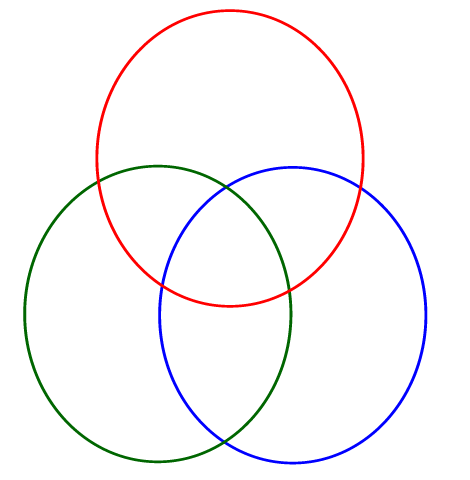
5. Make a Venn diagram of the three stories and list likenesses.
7. Write a class version of a tale using your students' suggestions.
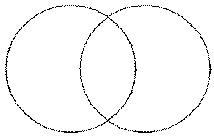
In order to retain ties to the original, a fractured tale must share some
similarities with its originator. Make a Venn diagram. List the similarities of
two tales in the middle and differences on the right and the left of the Venn.
Twisted:
Using what they've learned, have students create their own fractured tales.
- Have each student select a favorite fairy tale.
- Set aside a certain amount of class time and ask students to start
twisting their tales! They will rewrite their chosen fairy tale, giving it
unique twists.
- Have students invent new titles for their tales — using the original title
as a guide.
- Post students stories on a classroom bulletin board after reading
or telling them
aloud (if time allows).
"New" Fractured Tales:
select a famous fairy tale character.
select another famous fairy tale character.
select a modern saying.
select a famous place.
select a problem (silly or serious; ex.- environment, a bad hair day, allergic reactions, literacy, no money, etc.)
Now you have all the elements for a story - 2 main characters, a setting, a hook (saying), and a conflict. It is up to your creative juices to combine these into a story. Sometimes the elements can be put together to make a funny, fractured tale. Other times, it may fall short of your expectations, but it will still be a funny, fractured adventure.
Bibliography
For a great website that lists many, many traditional tales and their fractured versions go to Folk and Fairytales - Tongue-in-cheek Versions.
Traditional Tale Fractured Tale
Cinderella Cinder Edna by Ellen Jackson.
Cinder-Elly by Frances Minters
Cinderella and the Glass Flipper by Janet Perlman
Cinderella with Benjy and Bubbles by Ruth Perle.
Jack and the Beanstalk Kate and the Beanstalk by Mary Pope Osborne
Jack and the Meanstalk by Brain and Rebecca Wildsmith
Goldilocks and the 3 Bears Dusty Locks and the Three Bears by Susan Lowell
Jim Henson Presents Goldilocks, Miss Piggy's Dream by Louise Gikow
The Three Bears by Cindy West
The Frog Prince The Frog Prince, Continued by Jon Scieszka.
Little Red Riding Hood Ruby by Michael Emberley
The 3 Little Pigs The Three Little Javelinas by Susan Lowell
The Three Little Pigs by Steven Kellogg
The Three Little Pigs by James Marshall
The Three Little Pigs and the Fox: An Appalachian Tale
by William Hooks
The Three Little Wolves and the Big Bad Pig by
EugeneTrivizas
The True Story of the Three Little Pigs by Jon Scieszka
***Click here...For my workshop hand-out on "Fractured Fairy Tales" and the comprehensive version Fractured Thoughts
